A trade deficit that flips into a surplus in a single year is worth a second look.
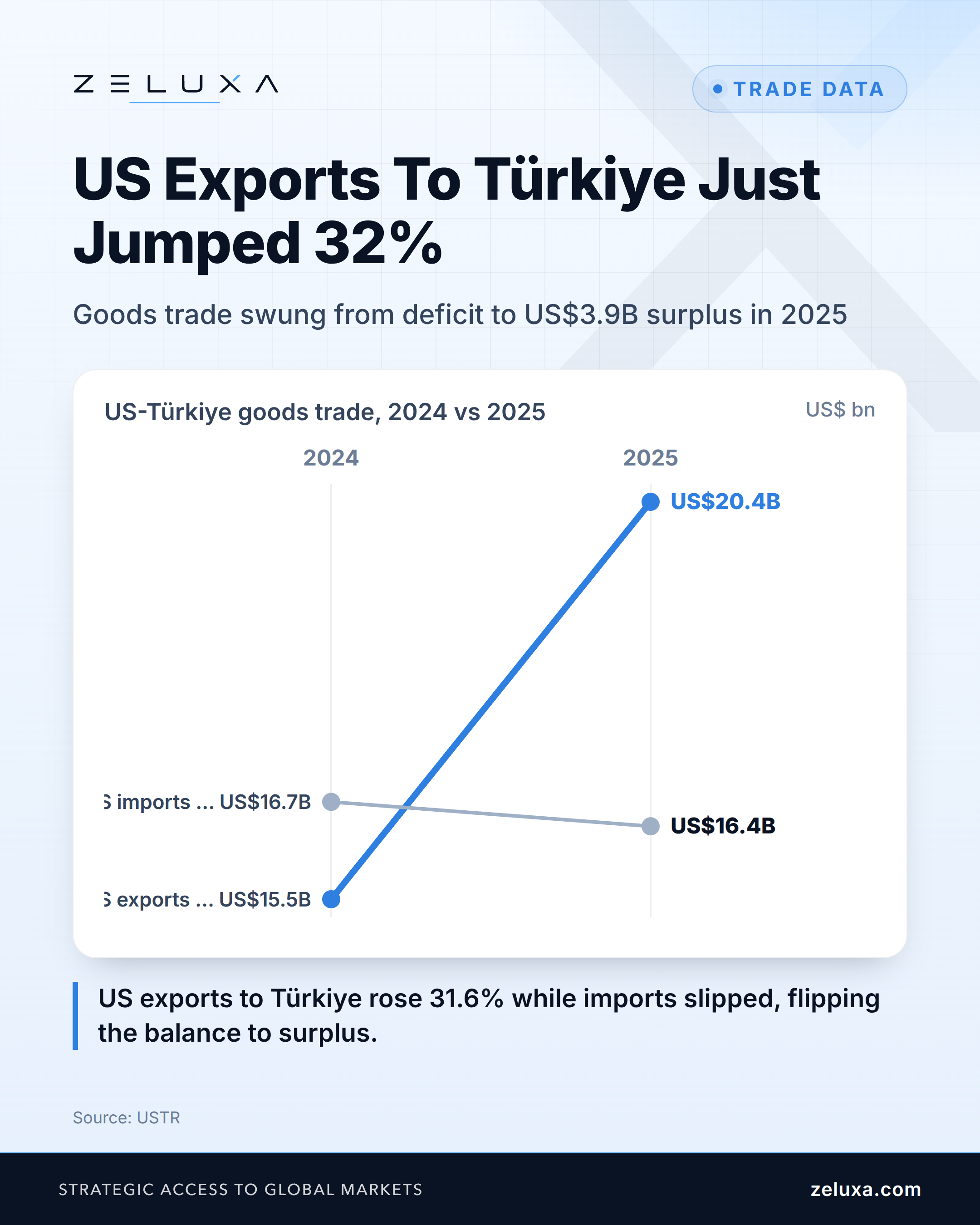
According to the Office of the U.S. Trade Representative, U.S. goods trade with Türkiye totaled $36.8 billion in 2025. U.S. exports to Türkiye rose 31.6% to $20.4 billion, while U.S. imports from Türkiye slipped 1.7% to $16.4 billion. The result: the goods trade balance moved from a $1.2 billion deficit in 2024 to a $3.9 billion surplus in 2025.
That's not a rounding error. It suggests Turkish buyers are absorbing more U.S. machinery, fuels, metals and industrial inputs even as Türkiye's own exports to the U.S. plateau, likely a mix of tariff adjustments, a weaker lira making U.S. goods comparatively easier to finance against future export revenue, and Turkish manufacturers restocking capital equipment.
For a North American company this raises real questions, not just a headline:
Is your product category part of that export growth, or outside it?
Are Turkish buyers reaching out to you directly now, before you've built local pricing or distribution?
Does a stronger U.S. export position change what market entry actually costs you this year, versus last?
We'd rather see a company test the second question with real data than assume momentum will hold. What's harder right now: getting into the Turkish market, or pricing correctly once you're in?
Sources
More insights
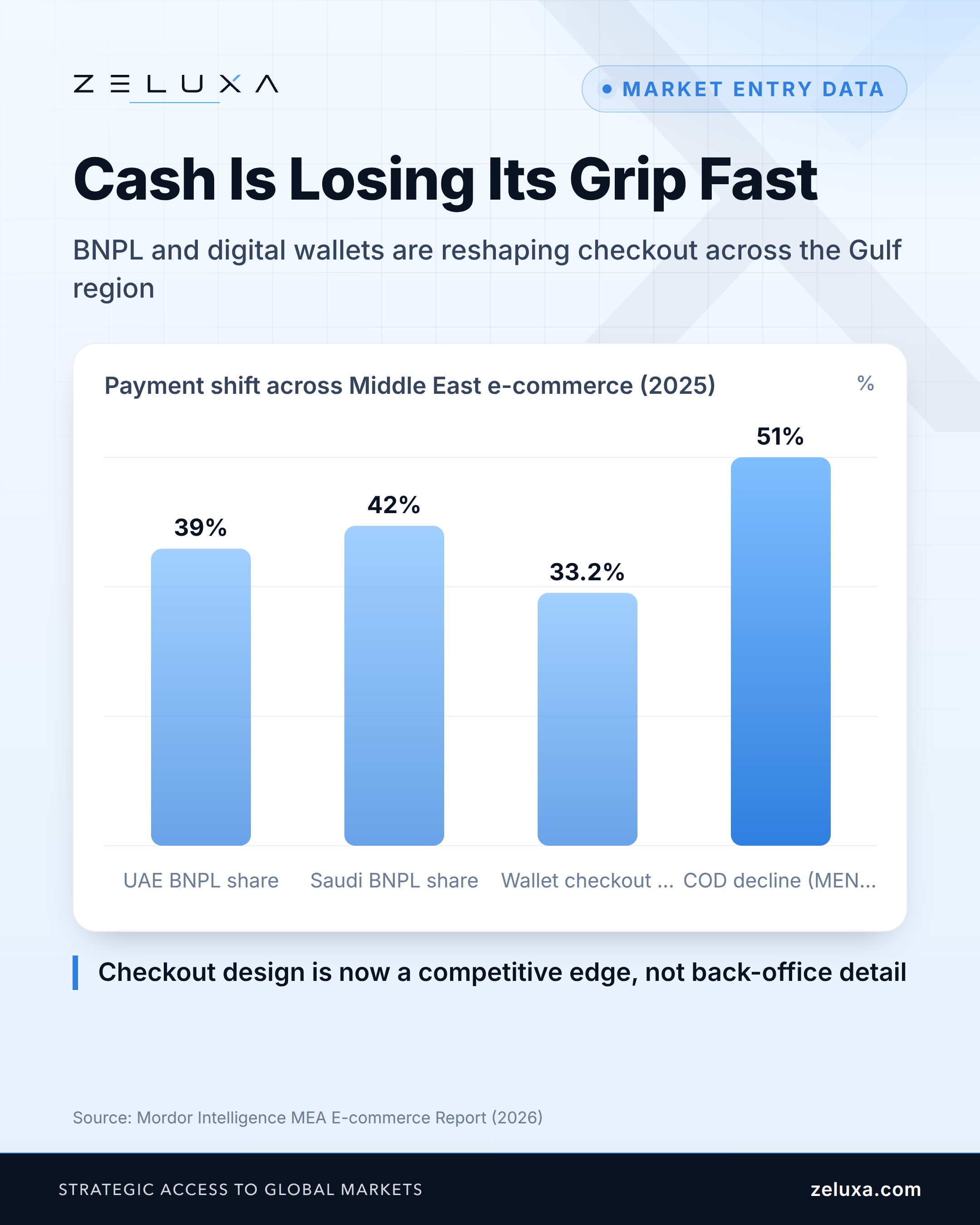
Cash on delivery used to be the default way to sell online across the Middle East. Not anymore.
A new Mordor Intelligence report on Middle East and Africa e-commerce puts a number on something we've been watching for a while: cash-on-delivery preference has dropped 51% across the region. Buy-now-pay-later is…
Read insight
Half of American shoppers now use AI to research a purchase. Only a third trust what it tells them.
That gap, reported in Alchemer's 2026 Retail Report, is the number that should matter most to anyone building market research right now — not the adoption figure everyone quotes. Usage is outrunning trust by roughly 15…
Read insight
There's a city in southeastern Türkiye built on a hill above the Mesopotamian plains. For centuries it sat where trade routes from Persia, Syria and Anatolia cr
It didn't become a hub by copying whoever arrived. It built with what it had: local limestone, a style of carving no caravan route could import, houses designed for its own climate and its own way of life. Different…
Read insight