Türkiye's e-commerce market grew roughly 14% to reach US$48 billion in 2025, and ECDB projects another 10 to 15% in 2026. That's happening in an economy where a
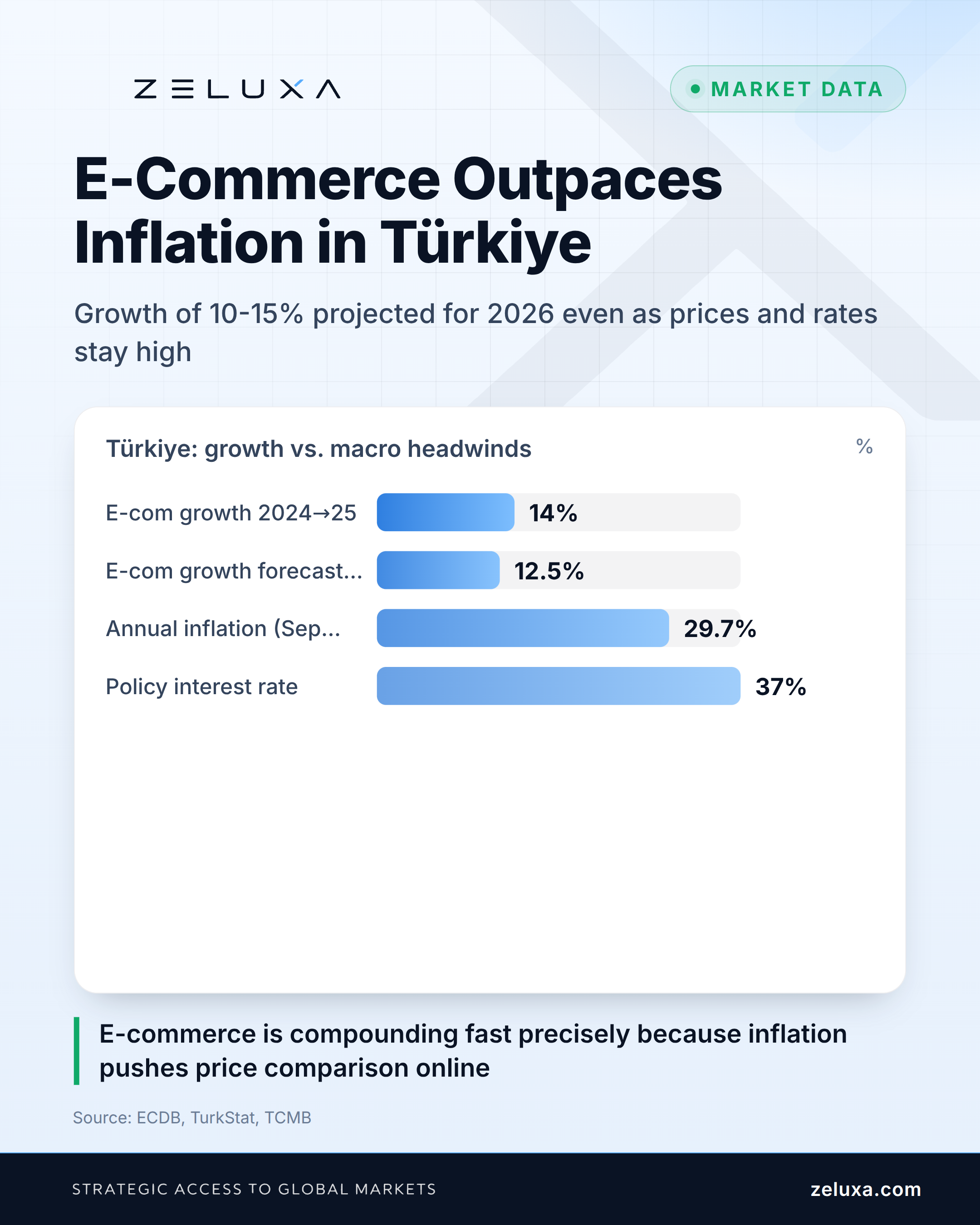
Most market-entry conversations we have start with the inflation number and stop there. That's a mistake. Inflation is exactly why e-commerce is compounding so fast: Turkish consumers have become aggressive price-comparers, and digital channels are where that comparison happens. The growth isn't happening despite the macro picture, it's partly because of it.
For a North American brand, this changes the entry math in a few ways:
- Pricing needs to be reviewed monthly, not annually. A price set in January can look stale by June.
- Marketplace presence (Trendyol, Hepsiburada, Amazon.tr) matters more than a standalone site, because comparison shopping is the default behavior, not a niche one.
- Local pricing in lira, hedged carefully, usually outperforms a fixed USD price shown to a lira-earning shopper.
- A 37% policy rate means local credit is expensive, so installment options and embedded finance at checkout aren't a nice-to-have, they're a conversion driver.
What's your read: does high inflation accelerate or scare off e-commerce entry for Western brands?
Sources
- ECDB — E-Commerce Industry in Türkiye 2018-2030 (2026)
- Lengow — Top Turkish marketplaces in 2026
- Trading Economics — Turkey Inflation Rate (October 2026)
- Turkish Minute — IMF raises Turkey's inflation forecast to 31.2 percent (October 13, 2026)
- Trading Economics — Turkey Interest Rate (October 2026)
- Antom/Knowledge Hub — Turkey E-commerce & Payment Trends Report (2026)
More insights
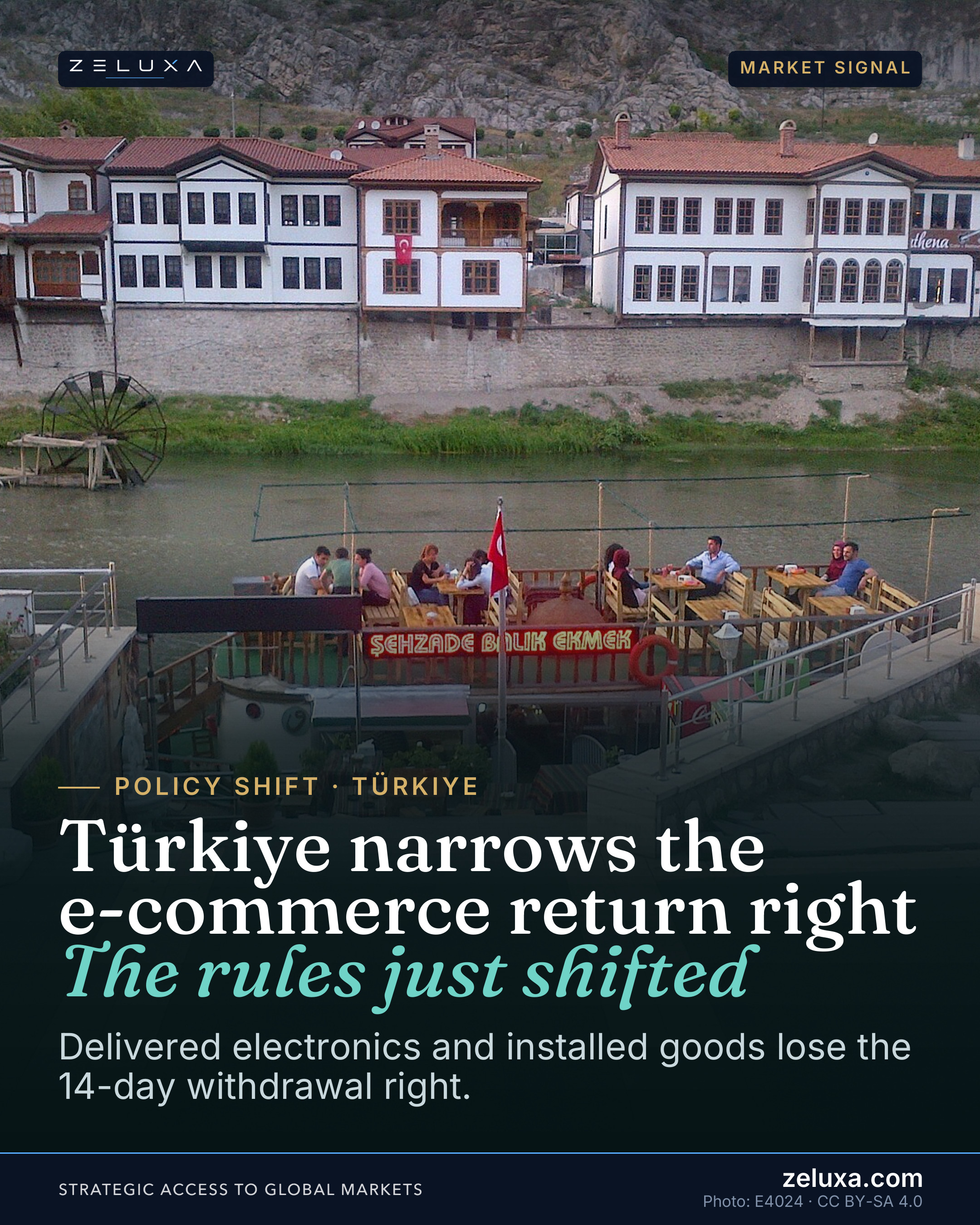
Most compliance checklists for Türkiye still focus on customs and tax. A quieter rule change matters just as much for anyone selling physical goods there.
Türkiye's amended Distance Contracts Regulation, published in the Official Gazette on May 24, 2025, took effect on January 1, 2026. The core change: consumers no longer have the automatic 14-day right to return…
Read insight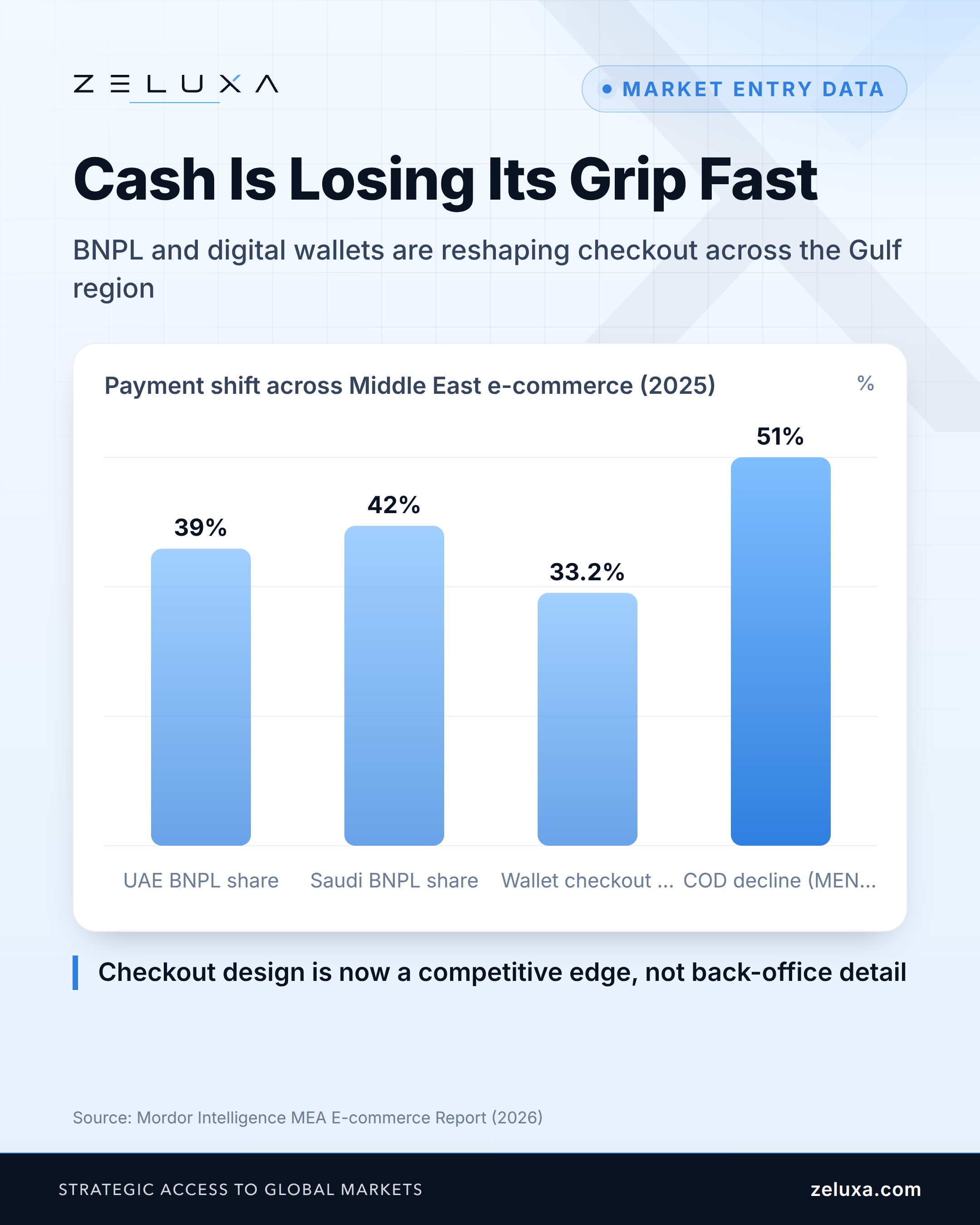
Cash on Delivery Is Declining in Middle East E-commerce
A new Mordor Intelligence report on Middle East and Africa e-commerce puts a number on something we've been watching for a while: cash-on-delivery preference has dropped 51% across the region. Buy-now-pay-later is…
Read insight
US Shoppers Use AI to Research, but Few Trust It
That gap, reported in Alchemer's 2026 Retail Report, is the number that should matter most to anyone building market research right now — not the adoption figure everyone quotes. Usage is outrunning trust by roughly 15…
Read insight