A mistake we keep seeing: US and Canadian buyers assume FSMA 204 traceability became mandatory in January 2026, and either rush suppliers who aren't ready or re
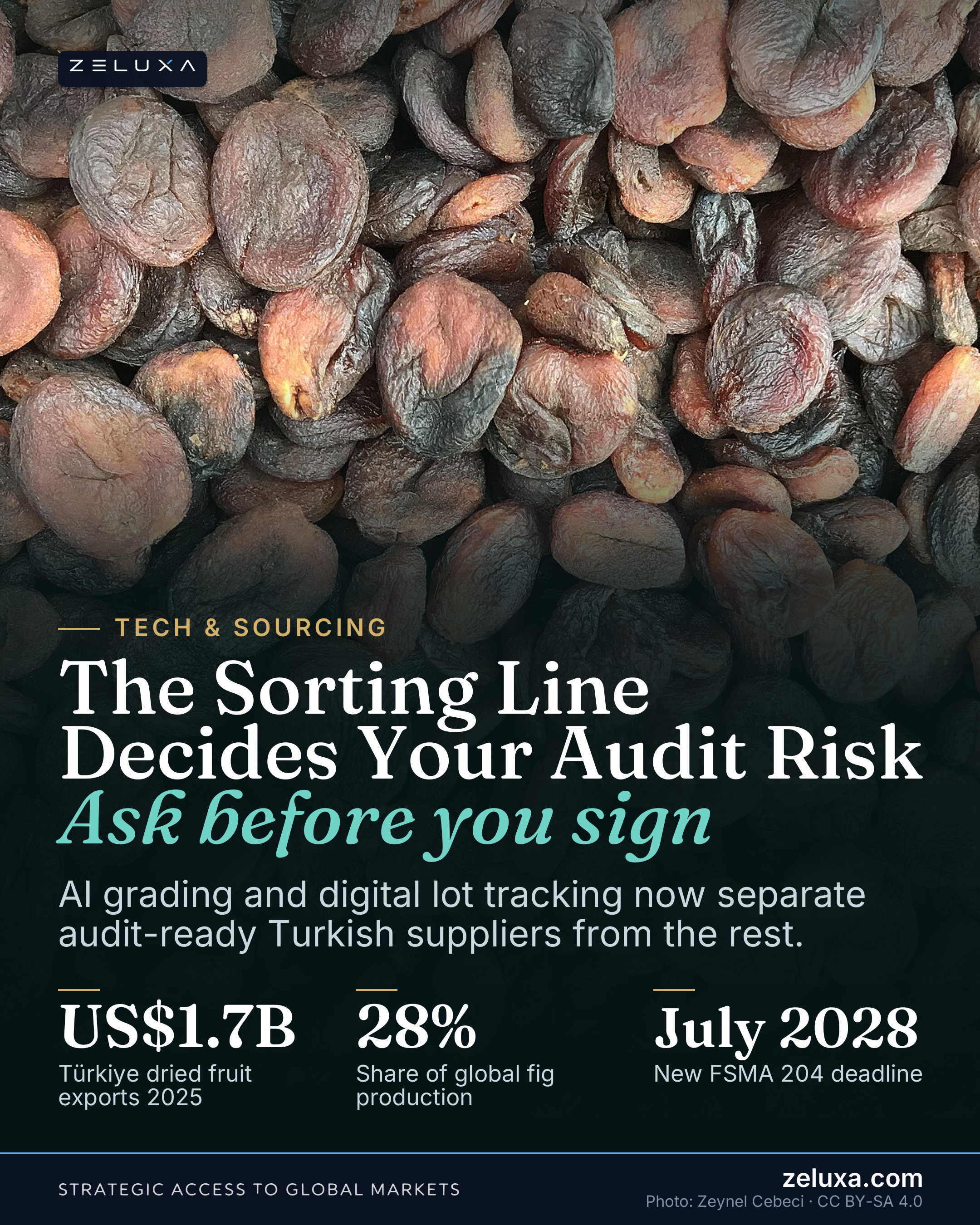
The FDA pushed the compliance date to July 20, 2028. The rule itself didn't change. Lot-level tracking, Key Data Elements, 24-hour traceback, all of it is still coming. Suppliers who start now will be ready; suppliers who wait until 2027 will be scrambling, and you'll inherit that risk during a recall.
Türkiye is a serious supplier here. It's the world's top fig producer and holds roughly two-thirds of global hazelnut exports, with dried fruit exports reaching US$1.7 billion in 2025 according to the Aegean Dried Fruit Exporters' Association. But "Turkish supplier" covers a wide range of operations, from facilities running AI-driven optical and hyperspectral sorting that flags defects and contamination automatically, to lines that still depend on manual visual checks.
That gap matters more than price per kilo. A supplier already capturing sorting data digitally can generate lot-level records fast. One running on paper and eyeballs cannot, no matter how good this year's crop looks.
Before you commit to a Turkish exporter: ask to see their sorting technology, not just a quality certificate. Ask how they'd produce a traceability record within 24 hours today, not in 2028.
What does your current supplier audit actually test: the product, or the system behind it?
Sources
- Croptracker: FSMA 204 Compliance for Growers: Your Traceability Roadmap to the 2028 Deadline (2026)
- Utah Produce Safety: FDA Food Traceability Rule (FSMA 204) (2026)
- Mundus Agri: Dried fruit: climate crisis clearly felt in Turkey (2025)
- TurkishAgriNews: Türkiye ranks first in global fig production, accounting for 28 percent of the total (2026)
- TOMRA: Nuts and dried fruit sorting and grading solutions
- ResearchGate: The role of Turkey in the world hazelnut production and exporting
More insights
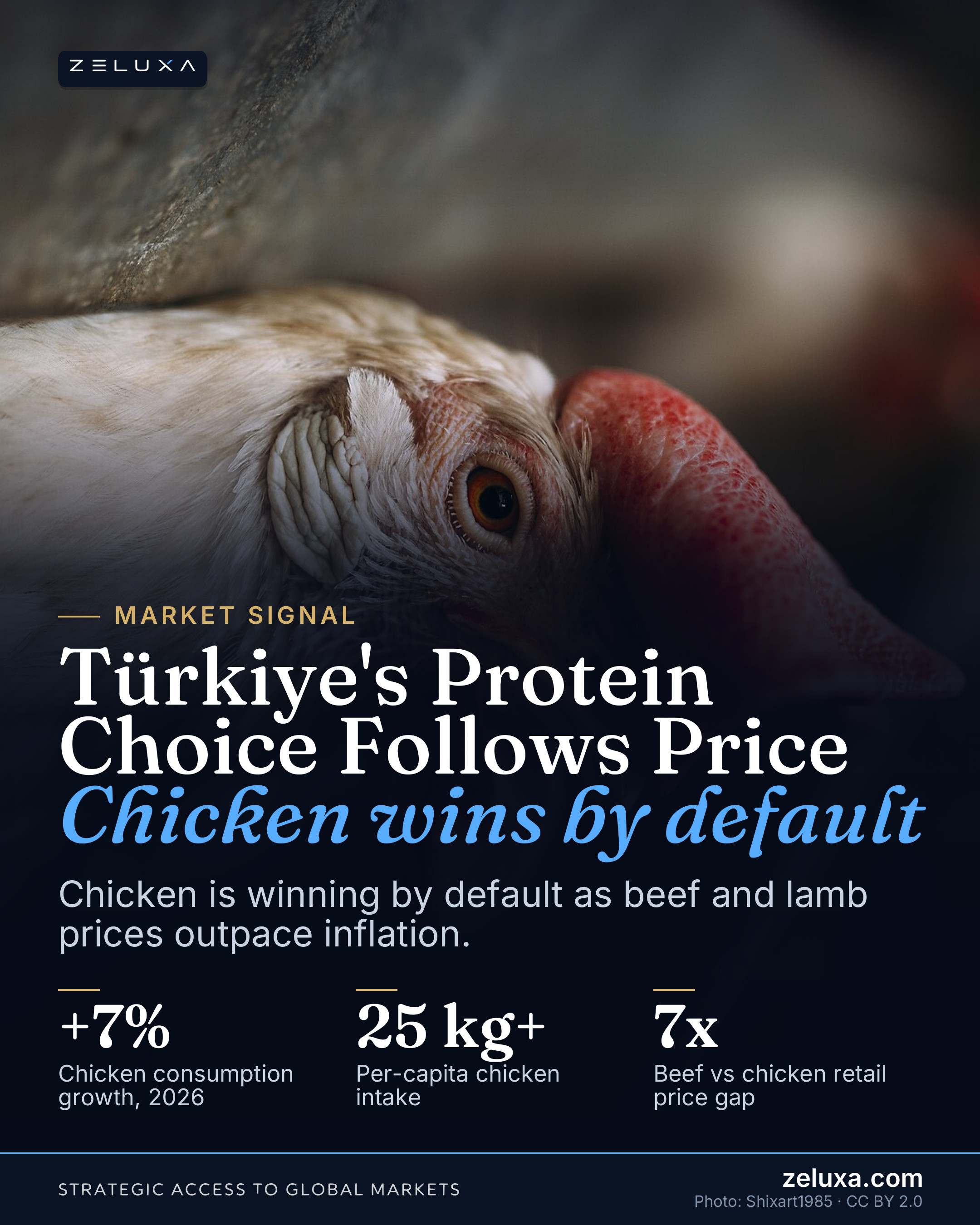
Türkiye's protein shift isn't about health trends or marketing. It's arithmetic.
USDA's Foreign Agricultural Service in Ankara forecasts Turkish chicken consumption will rise 7 percent in 2026, to 2.45 million metric tons, with per-capita intake set to pass 25 kg. The report is blunt about why…
Read insight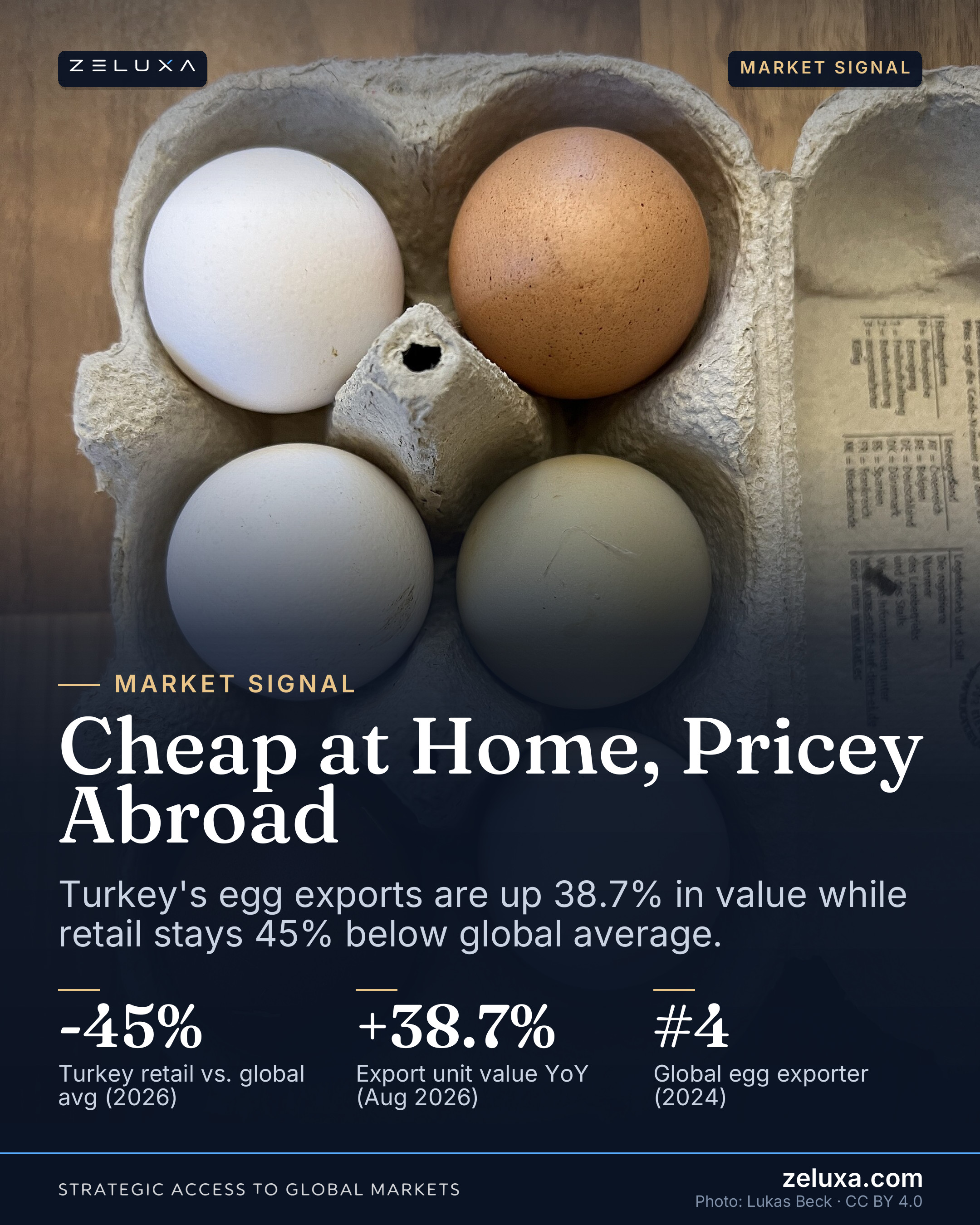
Turkey's eggs are cheap at home and getting pricier abroad. That spread is worth understanding before you sign a sourcing contract.
At Turkish retail, a carton of 10 eggs runs about US$1.58, which is 45% below the global average tracked across 31 countries, according to eggprice.world. Meanwhile Turkey's egg export unit value hit US$1.69 per dozen…
Read insight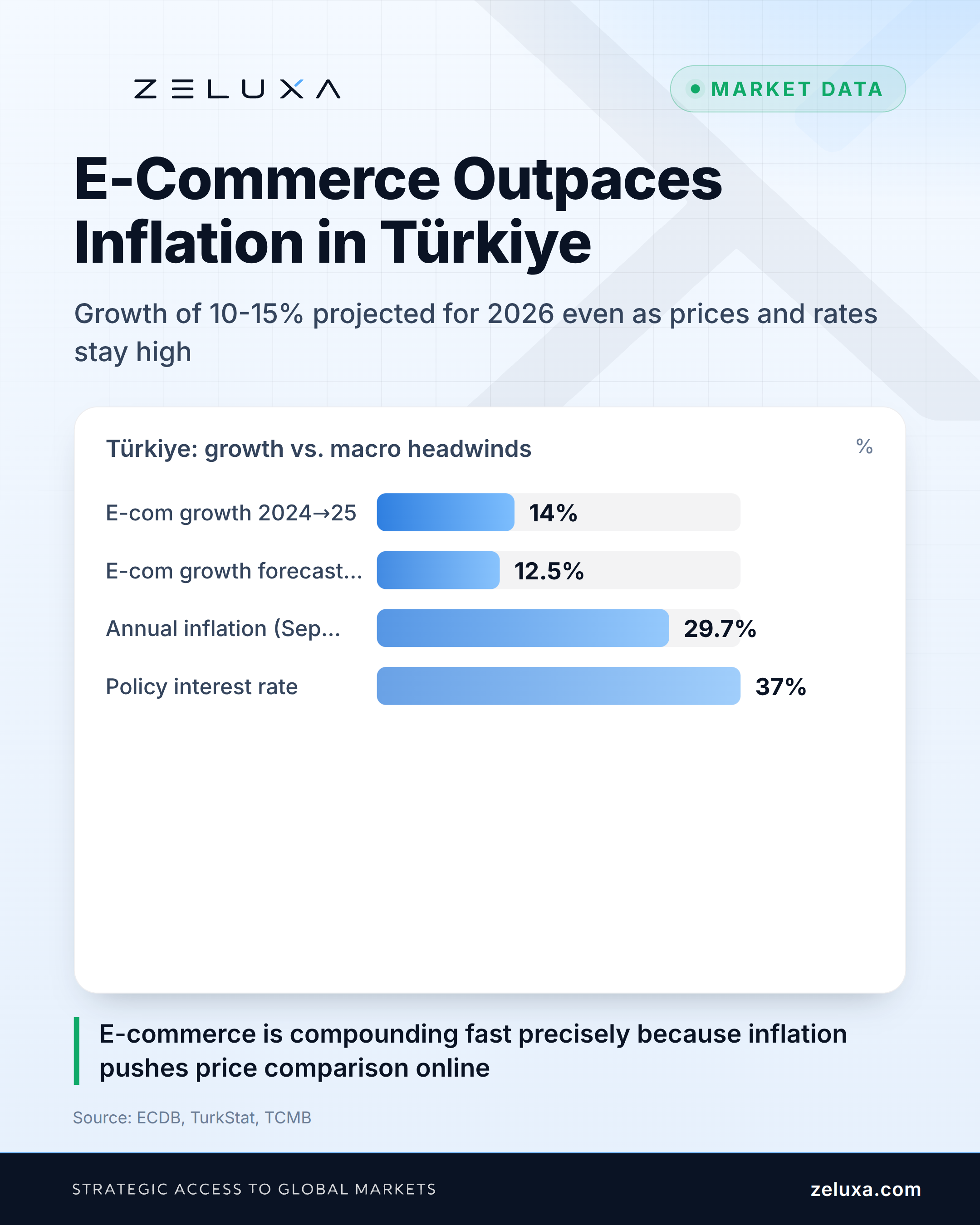
Türkiye's e-commerce market grew roughly 14% to reach US$48 billion in 2025, and ECDB projects another 10 to 15% in 2026. That's happening in an economy where a
Most market-entry conversations we have start with the inflation number and stop there. That's a mistake. Inflation is exactly why e-commerce is compounding so fast: Turkish consumers have become aggressive…
Read insight