Turkey's eggs are cheap at home and getting pricier abroad. That spread is worth understanding before you sign a sourcing contract.
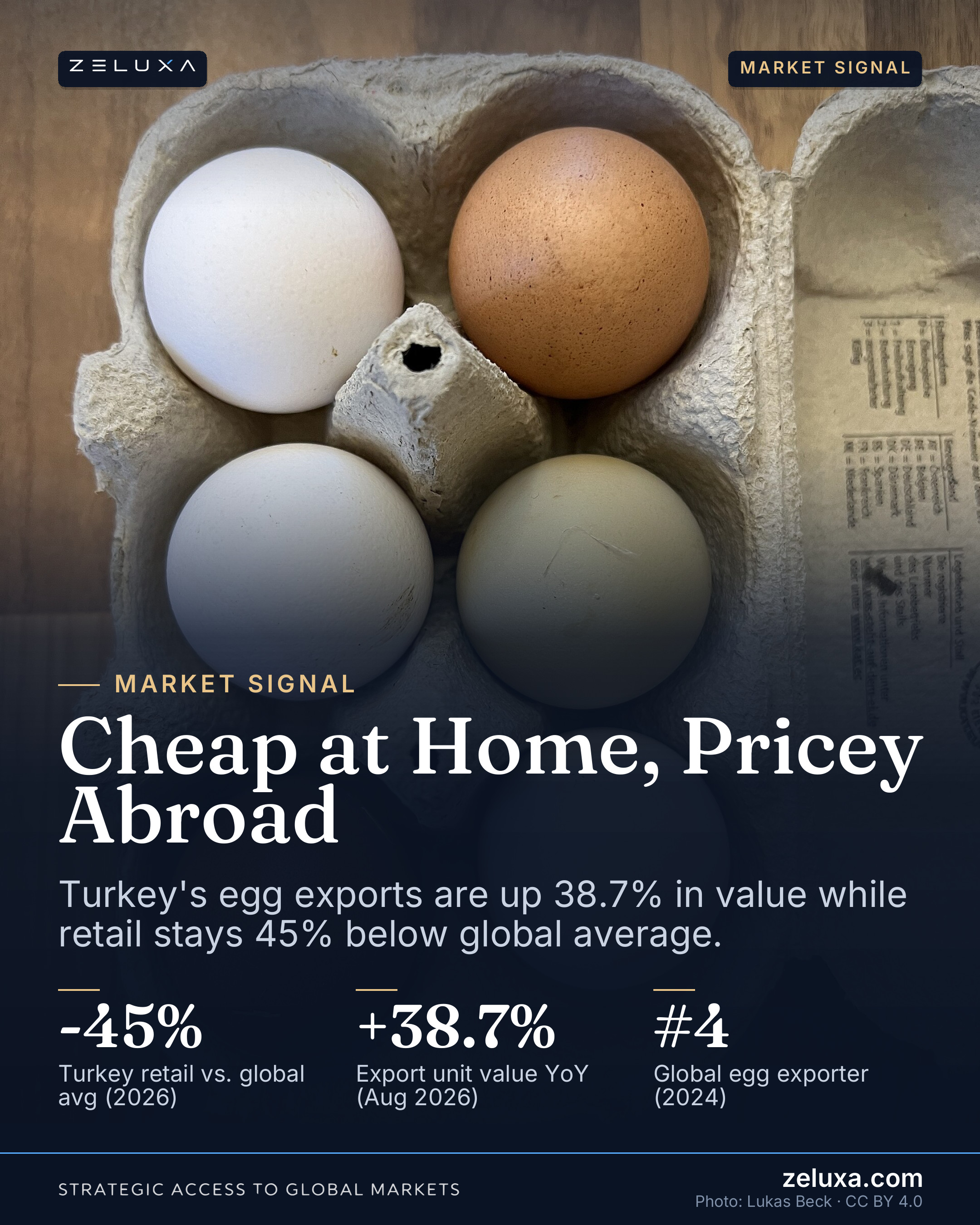
At Turkish retail, a carton of 10 eggs runs about US$1.58, which is 45% below the global average tracked across 31 countries, according to eggprice.world. Meanwhile Turkey's egg export unit value hit US$1.69 per dozen in August 2026, up 38.7% year-on-year, per Selina Wamucii's analysis of UN Comtrade data. Turkey is already the world's 4th-largest egg exporter by value, holding 6.2% of global exports in 2024 on roughly US$184 million in shipments.
Why the gap? Feed is imported and priced in hard currency, but most eggs are sold in lira. That currency mismatch keeps domestic shelf prices subdued even as export pricing climbs with global demand, including recent demand spikes tied to avian flu disruptions elsewhere.
For US and Canadian buyers, this is a live sourcing signal, not a forecast. A few questions worth testing before committing:
- Is the export price you're quoted tracking the unit-value trend, or still anchored to older contracts?
- How exposed is your supplier to lira volatility and feed-cost swings?
- Does a 38.7% cost increase still beat your current supply chain on landed cost?
We'd treat Turkey as a serious, scaling egg and protein sourcing option, but one where the contract terms matter as much as the price on day one.
Anyone currently benchmarking Turkish poultry or egg suppliers against domestic US or Canadian costs?
Sources
More insights
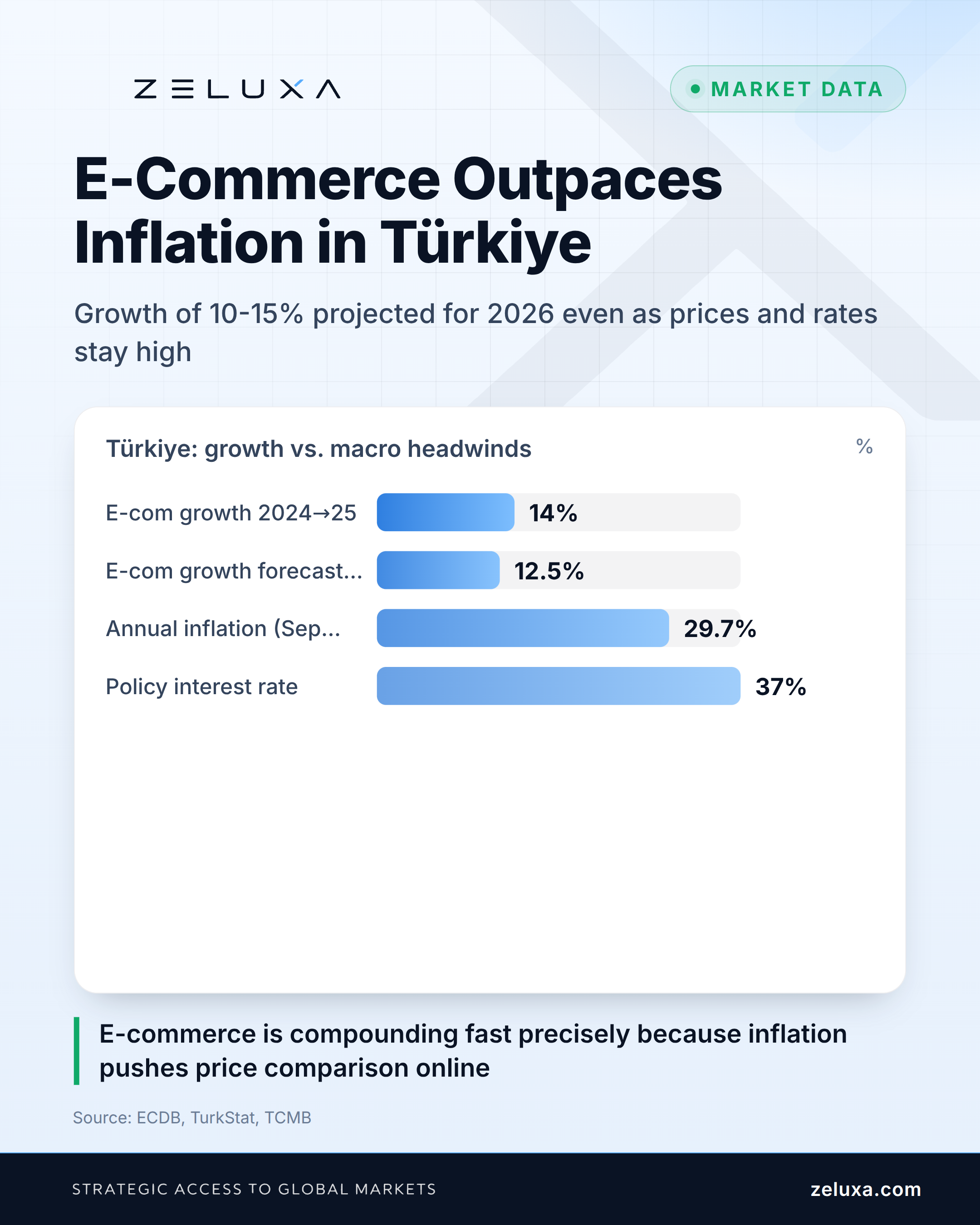
Türkiye's e-commerce market grew roughly 14% to reach US$48 billion in 2025, and ECDB projects another 10 to 15% in 2026. That's happening in an economy where a
Most market-entry conversations we have start with the inflation number and stop there. That's a mistake. Inflation is exactly why e-commerce is compounding so fast: Turkish consumers have become aggressive…
Read insight
Most compliance checklists for Türkiye still focus on customs and tax. A quieter rule change matters just as much for anyone selling physical goods there.
Türkiye's amended Distance Contracts Regulation, published in the Official Gazette on May 24, 2025, took effect on January 1, 2026. The core change: consumers no longer have the automatic 14-day right to return…
Read insight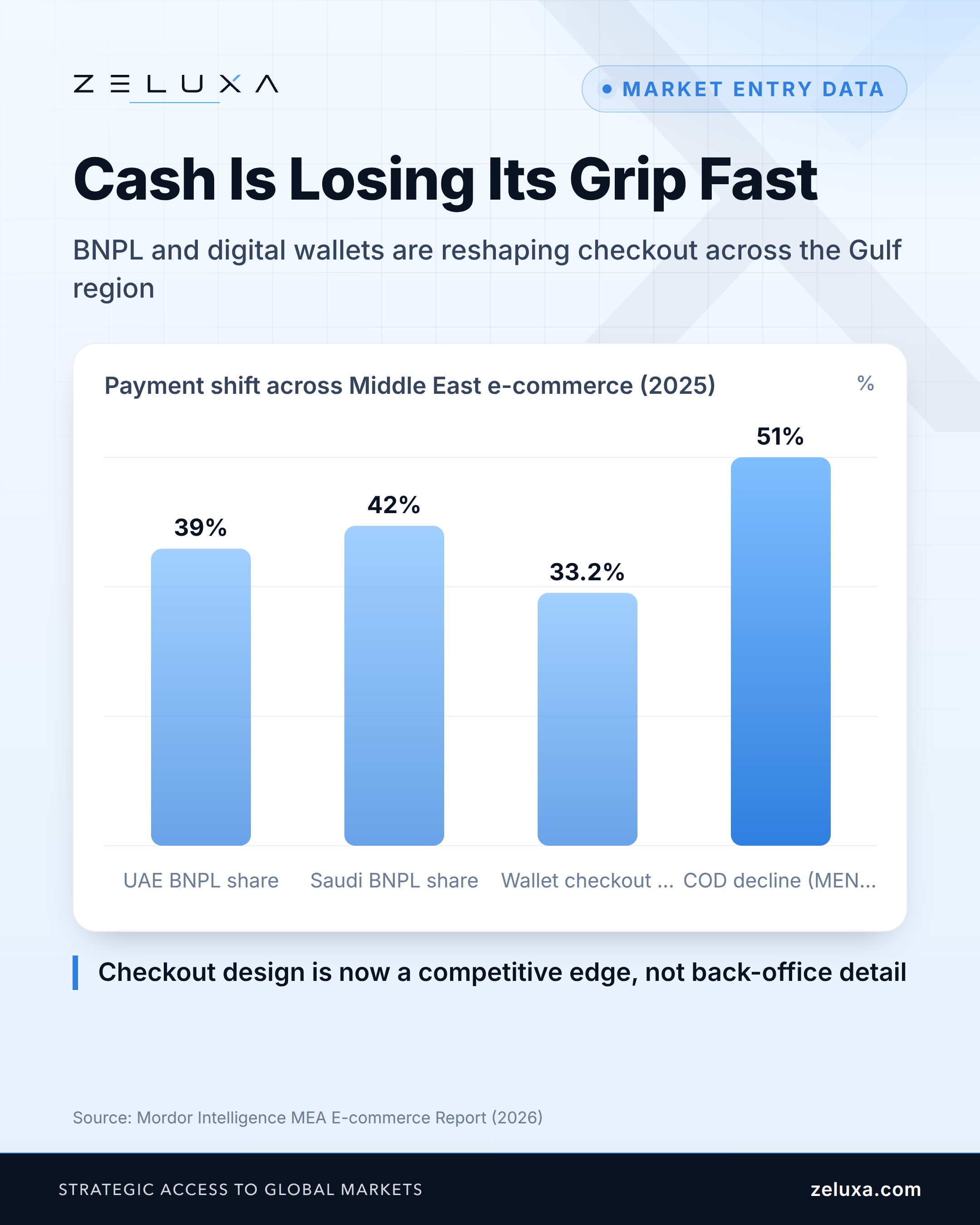
Cash on Delivery Is Declining in Middle East E-commerce
A new Mordor Intelligence report on Middle East and Africa e-commerce puts a number on something we've been watching for a while: cash-on-delivery preference has dropped 51% across the region. Buy-now-pay-later is…
Read insight